Related People
Randi Williams

Randi Williams Delivers Play@TED Talk: How to Raise Kids Who Question AI
Let’s replace the perceived magic of AI with critical thinking
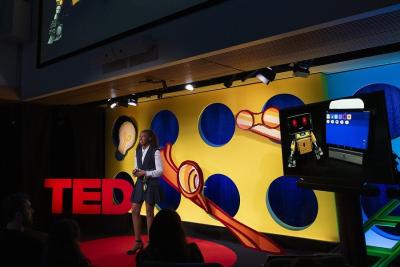
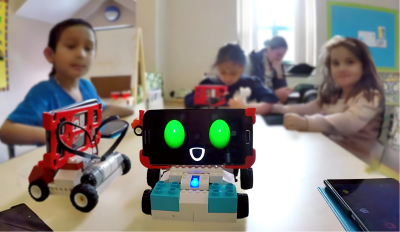
Williams wants children and parents to understand is that AI is not magic.
As artificial intelligence (AI) makes its way into toys, cultivating a new era of digital literacy with children is a necessity.
Over the past decade, AI and education researcher Randi Williams has had thousands of conversations with kids around the world about AI. Williams, who joined Carnegie Mellon University’s Human-Computer Interaction Institute as an assistant research professor this month, has been exploring how children perceive the friendliness or authority of robots and how AI systems can either support or disrupt social and emotional growth.
In her recent Play@TED talk, Williams shares that when it comes to social robots, young children are in the process of figuring out how AI works just like the rest of us.
“AI devices mimic intelligence and friendliness so well that children learn to trust them … And there is real danger of children becoming overly reliant on or inappropriately attached to their smart toys,” said Williams.
Adults don’t need to be AI experts or pretend they have all of the answers, but people of all ages should learn to question AI to keep children safe.
“We need to raise a generation of children who know that they are the ones who get to write, and even rewrite, the rules of AI,” Williams said. “This work starts at the dinner table.”
Williams shared a story about one kindergartner who grew frustrated as he kept losing Rock, Paper, Scissors games against his robot. The mischievous student thought about re-programming his robot with the opposite rules of the game, so then he could finally win. Williams took the opportunity to talk to him about who writes the rules of AI.
"If you can teach your PopBot the wrong rules of Rock, Paper, Scissors, how do you know your Alexa was taught the right ones?" Williams recalled. This led to a discussion on trust and the importance of verifying what AI says, with an adult’s help, just to make sure that Alexa or any other system has been taught all the right rules.
“The big idea that I want children to understand is that AI is not magic. AI is a set of rules written by people. And it's up to us, those of us who have been around for a bit longer, to make sure that children aren't being programmed by their toys, but rather things work the other way around,” said Williams.
Williams, who has a Ph.D. from the Personal Robots Group at the MIT Media Lab, is a founding member of the non-profit Day of AI.
Play@TED is a one-day event that brings together thinkers, creators, educators and innovators to explore the power of play in learning, creativity, connection and everyday life.
Research Areas