
Cognitive Science and Behavioral Science
Understanding people is essential to studying how we interact with computers. The way our users think, perceive, behave, learn, and even how they become frustrated, can be used to inform better, more user-friendly designs and systems. For example, being aware of cognitive load (the mental memory required for processing info and completing a task) helps designers to create interfaces that are easy and intuitive to navigate.
Understanding human behavior is also essential to designing better systems and interactions. In HCI, the behavioral sciences help us to understand how people make decisions and interact with technology. Elements from behavioral sciences are used to inform our persuasive designs, encourage healthy habits or improve user engagement.
Students who want to learn more about how cognitive and behavioral sciences are applied to HCI might be interested in the following courses:
-

Rathje Named SAGE Emerging Scholar
NEWSSteve Rathje, an assistant professor in Carnegie Mellon University's Human-Computer Interaction Institute, has received a 2026
-

Carvalho Earns NSF CAREER Award To Study Motivation and Learning
NEWSHCII faculty member Paulo Carvalho has received an NSF CAREER Award to study the reciprocal relationship between student motivation and ...
-

Why Pittsburghers Are Already Stressed About the Parkway East Closure — and What They Can Do About It
NEWSBefore the upcoming closure of the Parkway East, many Pittsburgh commuters are already feeling the stress.
-

Design Tweaks That Keep Students Learning
NEWSGetting a question wrong might be the best thing that can happen to a student, if they try again. Researchers at Carnegie Mellon Universit...
-

The AI Is in the Room
NEWSIn this ghost story, there is no haunted mansion. No candles mysteriously snuffed out. No strange things going bump in the night or glimps...
-

HCII Alum Reimagines Online Spaces for All
NEWSHow we spend time online and participate in virtual spaces can impact how we show up offline, at everything from town halls to book clubs....
-

Is AI Becoming Selfish?
NEWSNew research from Carnegie Mellon University's School of Computer Science shows that the smarter the artificial intelligence system, the m...
-

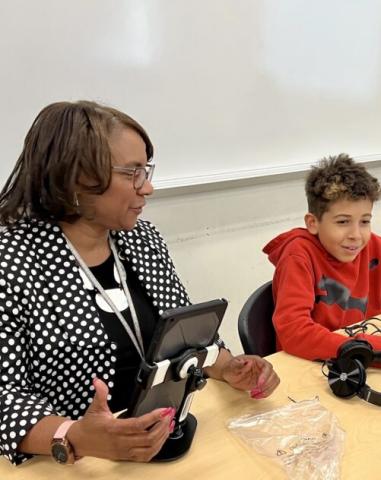
What’s Next for AI and Education
NEWSThe Human-Computer Interaction Institute (HCII) had a large presence at three educational technology-focused conferences last month in Pal...
-

Three Seed Grants Awarded for Generative AI and Education Research
NEWSCarnegie Mellon University, as a leader in technology for education, provides tools and methods for CMU and the broader education communit...
-

Practice Makes Perfect
NEWSWhile lectures are often considered a key element in teaching, research from Carnegie Mellon University's School of Computer Science demon...
-
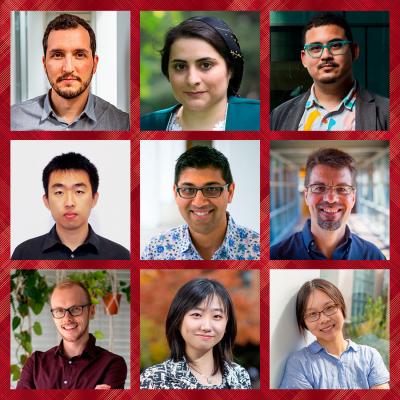
SCS Faculty Receive Google Academic Research Awards
NEWSNine School of Computer Science faculty members recently received Google Academic Research Awards, which aim to fund and actively collabor...