

Healthcare + HCI
Applying Human-Computer Interaction (HCI) methods to the healthcare field contributes to the design, usability, accessibility and effectiveness of a variety of medical technologies to better serve people.
Many today are familiar with wearable health devices, such as smartwatches and fitness trackers, that gather real-time data in order to provide health monitoring for patients. There are many other opportunities to explore within HCI + healthcare, such as: developing human-centered software and hardware; utilizing sensors for activity recognition and measurement; designing information displays for wearables, apps, and screens; and using applied machine learning algorithms to analyze patterns. Everyday applications continue with opportunities in physical therapy, mental health, workout tracking, and even the potential to improve access to medical resources around the world.
It is important to note that human-centered design in healthcare settings and systems must also address patient safety and ethics considerations, including data privacy, consent, and the potential for bias in AI-driven systems. Ensuring the future of healthcare tech is ethically designed is key to protecting patients and maintaining trust.
Students who want to learn more about this HCI research area might be interested in the following courses:
- 05-437/05-837: Ubiquitous Computing
- 05-499/05-899: Special Topics: Fairness, Accountability, Transparency, & Ethics (FATE) in Sociotechnical Systems
- 05-399/05-899: Special Topics: AI Innovation in the Healthcare Sector
- 17-320: Machine Learning and Sensing for Healthcare (offered by S3D)
Faculty Researchers
-

CMU at DIS 2026
NEWSThe Association of Computing Machinery (ACM) Conference on Designing Interactive Systems (DIS) was held June 13-17, 2026, in Singapore. ...
-

CMU Tool Prevents Anxiety Spirals When Searching for Medical Advice Online
NEWSReddit isn't a doctor, but that doesn't stop people from turning to it for medical questions. And since people won't change their behavior...
-

CMU at CHI 2026
NEWSThis year, authors from CMU contributed to 76 papers accepted to CHI, including 12 award-winning papers. “The interdisciplinary CHI confer...
-

PeerCoPilot Uses AI To Support Community Mental Health Care
NEWSResearchers have developed an AI-powered chatbot designed both with and specifically for people working in behavioral health. The chatbot,...
-
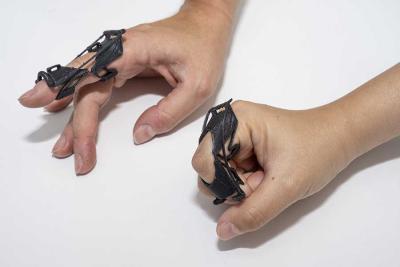
CMU Researchers Develop Customizable Finger Brace for Injury Recovery
NEWSCMU researchers created the first-ever 3D-printed finger brace that easily shifts from rigid to flexible, eliminating the need to take it ...
-

CMU Technology Helps People Maintain Health at Home
NEWSAn app designed by Carnegie Mellon University researchers uses artificial intelligence to assess depression and fatigue. The goal? To bett...
-
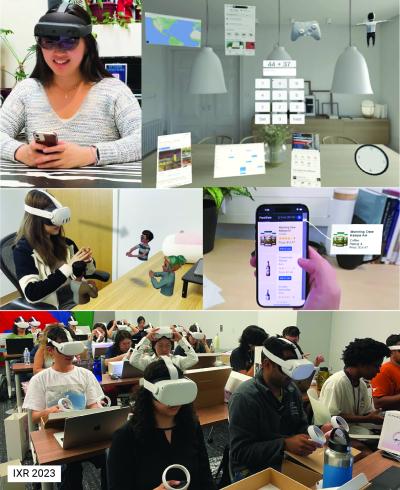
Up Next in Special Topics
NEWSOur Special Topics courses provide the opportunity to explore the future of HCI, guided by the experts who are shaping the field. These dy...
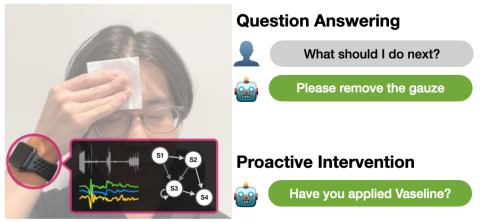
PrISM: Procedural Interaction from Sensing Module
PROJECTThere are numerous complex tasks in everyday life, from cooking to medical self-care, that involve a series of atomic steps. Properly executing these step...
-
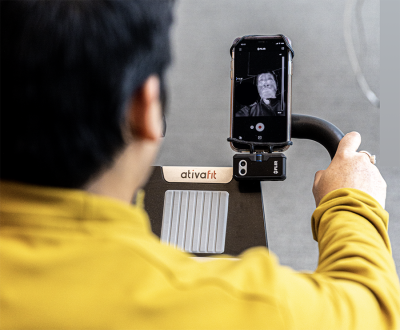
Thermal Camera Senses Breathing To Improve Exercise Calorie Estimates
NEWSAny fitness buff will tell you that the estimates of calories burned made by smartphones, smartwatches and other wearable devices vary wil...

What Makes Digital Support Effective?
PROJECTOnline mental health support communities have grown in recent years for providing accessible mental and emotional health support through volunteer counsel...

Matching for Peer Support
PROJECTOnline mental health communities (OMHCs) have emerged in recent years as an effective and accessible way to obtain peer support, filling crucial gaps of t...
-

Smartwatches Could One Day Help Diagnose ADHD in Children
NEWSSmartwatch sensor technology developed by Carnegie Mellon University researchers could help doctors make more accurate diagnoses of attent...